Summary
A Plug & Play solar system is a small photovoltaic system designed to make domestic solar generation simpler and more accessible. Solar panels generate direct-current (DC) electricity, while a microinverter converts this into alternating current (AC) that can contribute to the electricity being used within the home.
When solar electricity is available, it can help supply appliances already running in the property. This reduces the amount of electricity that needs to be imported from the grid. The financial benefit depends on the cost of the system, sunlight, panel orientation, shading, electricity prices and how much of the generated electricity is consumed within the home.
One of the major attractions of Plug & Play solar is its relatively low entry cost compared with a full rooftop photovoltaic system. Because a small system may use only one or two panels, a compact microinverter and a simple mounting arrangement, the initial investment can be substantially lower. In favourable circumstances, this can lead to a much shorter payback period.
Small systems are also flexible in terms of installation location. Panels do not necessarily need to be installed on the main house roof. Suitable walls, flat roofs, garages, sheds, fences, patios, gardens and ballasted mounting systems can all create additional possibilities.
🌱 Full Length Article (Click to collapse)
What Is a Plug & Play Solar System and How Does It Work?
Introduction: A Simpler Way to Start Generating Solar Electricity
Solar energy is often associated with large arrays of photovoltaic panels permanently installed across a house roof. That remains an excellent solution for many properties, but it is no longer the only way households can generate electricity from sunlight.
Plug & Play solar systems are designed around a smaller and simpler concept. A typical system consists of one or more solar panels connected to a compact microinverter. The panels produce direct-current electricity, or DC, and the microinverter converts this into alternating current, or AC, that can be used within the household electrical system.
This makes small-scale solar generation possible in locations where a conventional rooftop installation may be unnecessary, too expensive or impractical. Depending on the property and mounting arrangement, panels can potentially be positioned on a flat roof, exterior wall, suitable fence, garage, shed, pergola, patio or garden area.
1. What Does “Plug & Play Solar” Actually Mean?
The expression “Plug & Play” describes solar equipment designed to simplify the process of starting small-scale photovoltaic generation. Rather than relying on a large central inverter and extensive DC cabling, a compact installation commonly uses a microinverter positioned close to the solar panels.
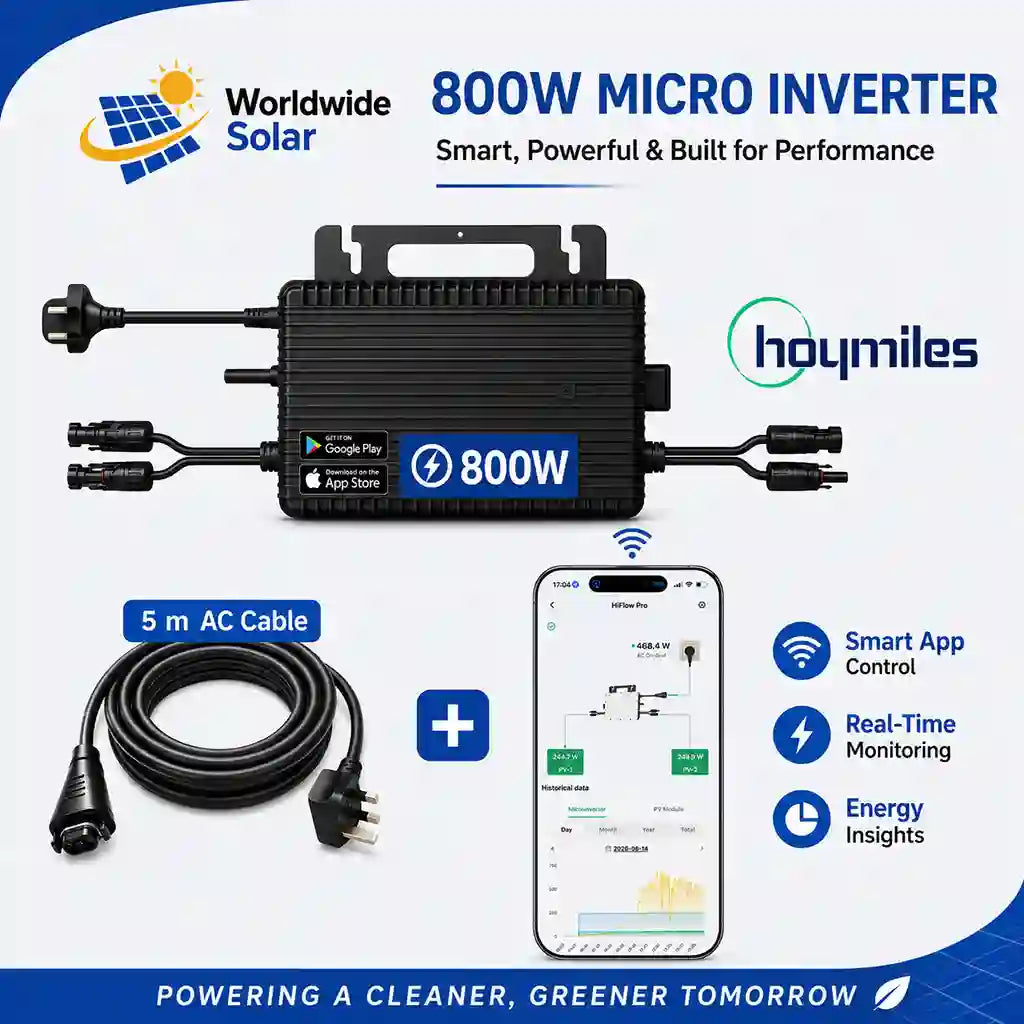
Microinverters are especially suitable for small systems because they perform the essential conversion from DC to AC close to the panels. Many modern units also offer monitoring functions, allowing users to view current and historical energy generation through an app or online platform.
Plug & Play should not, however, be interpreted as meaning that every solar generator is suitable for every electrical installation without consideration. Solar generation interacts with the home's electrical system, so the equipment, connection method and electrical installation all need to be suitable.
2. The Four Main Parts of a Plug & Play Solar System
Although individual systems vary, four basic elements are found in most small Plug & Play solar installations.
Photovoltaic modules capture sunlight and produce DC electricity. Generation varies with sunlight, panel wattage, temperature, orientation, angle and shading.
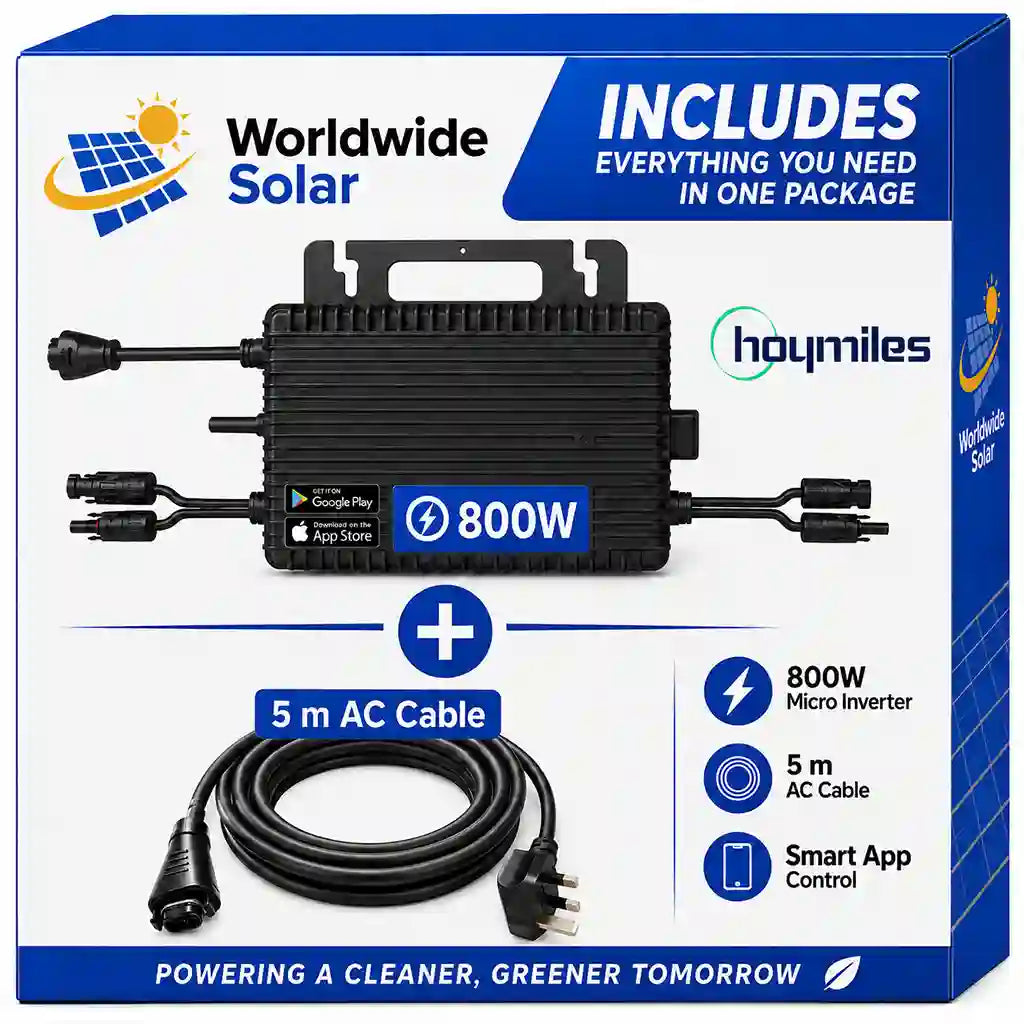
The microinverter converts the panels' DC electricity into AC electricity suitable for use within the household electrical system.
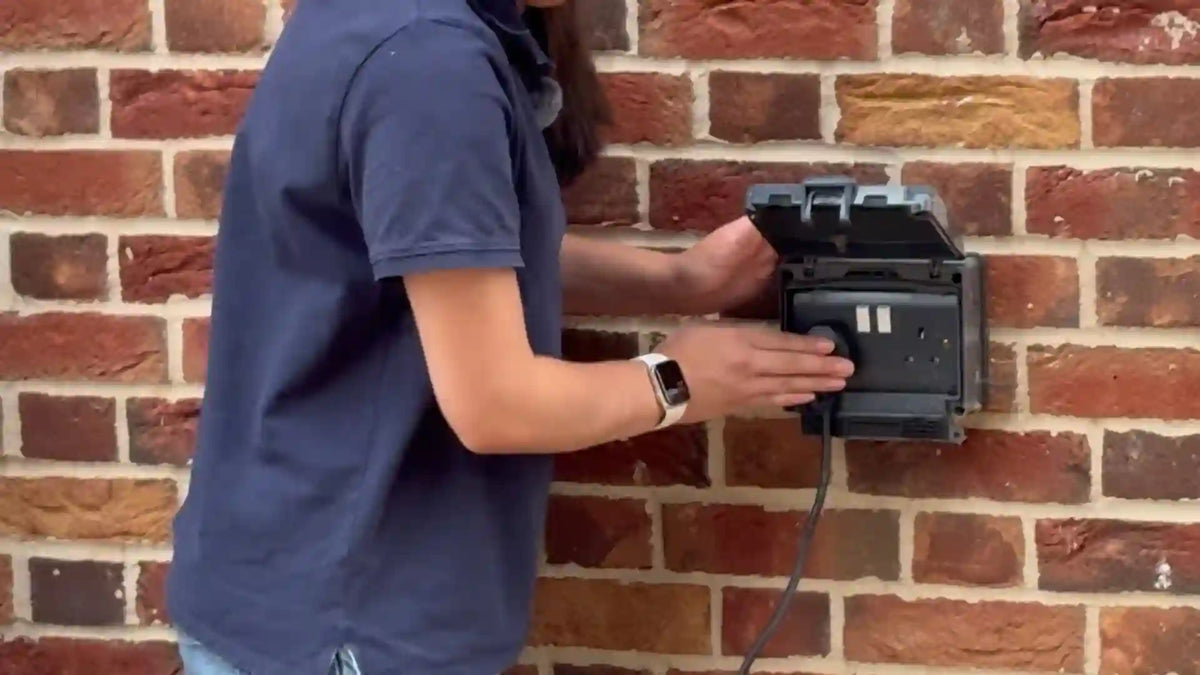
The AC side connects the generating equipment to the home's electrical installation using an appropriate connection arrangement.
Panels need secure support. Mounting solutions can be designed for walls, fences, roofs and garden installations, including ballasted systems.
3. How Do Solar Panels Produce Electricity?
A photovoltaic solar panel contains many solar cells. When sunlight reaches these cells, energy from the light causes electrical charges within the semiconductor material to move. This produces direct-current electricity.
The amount generated changes constantly. Output may be relatively low early in the morning, increase as sunlight becomes stronger and then fall again towards the evening. Cloud cover, shadows, panel temperature and the seasons all influence production.
A panel rated at 450 W therefore does not produce 450 watts continuously. The figure is a rated maximum under specified test conditions. Real-world output changes throughout the day and throughout the year.
4. Why Is a Microinverter Needed?
Solar panels naturally produce DC electricity, while household electrical systems operate using AC electricity. The electricity therefore needs to be converted before it can contribute to household demand.
In a conventional large rooftop installation, multiple panels may connect to a central string inverter. With a small Plug & Play system, a microinverter performs this conversion close to the solar panels.
Many microinverters also contain Maximum Power Point Trackers, commonly known as MPPTs. These continuously adjust operating conditions so that connected solar panels can generate as efficiently as possible under changing light conditions.
Independent MPPT inputs can be especially useful when two solar panels experience different conditions. For example, one panel may temporarily be shaded while another remains in direct sunlight.
5. Where Does the Solar Electricity Go?
Once the microinverter converts the electricity into AC, the generated power becomes available to help meet the home's current electricity demand.
Imagine that your home is consuming 500 W because a refrigerator, router, computer and several other appliances are operating. If the solar system is generating 350 W at that moment, the solar electricity can supply part of this demand and less electricity needs to be purchased from the grid.
6. What Happens When Solar Production Is Lower Than Household Demand?
The electricity grid simply supplies the difference.
If the home currently requires 700 W and the solar installation is producing 400 W, the remaining 300 W can be imported from the grid. The household appliances continue operating normally.
This is one of the reasons small solar systems can be useful. They do not need to supply the entire home. Instead, they can continuously offset part of the household's daytime electricity consumption.
7. What Happens When the Panels Produce More Than the Home Is Using?
At some times of day, solar generation may exceed the household's immediate demand. What happens to the surplus depends on the installation configuration and the applicable electricity-network arrangements.
This is why self-consumption is important when considering the economics of a small solar system. Electricity used directly within the home can replace electricity that would otherwise have been purchased from the grid.
A household with regular daytime electricity consumption may therefore make greater direct use of its solar generation than a property that is largely empty during daylight hours.
8. Plug & Play Solar Compared with a Traditional Rooftop System
🌱 Plug & Play Solar
- Often one or two solar panels
- Compact microinverter
- Lower initial purchase cost
- Smaller installation footprint
- Flexible garden, wall, fence or roof locations
- Designed mainly to reduce household grid consumption
🏠 Traditional Rooftop Solar
- Usually several solar panels
- Larger inverter or multiple inverters
- Higher initial investment
- Dedicated rooftop installation
- Often designed for substantially higher annual generation
- May be combined with battery storage
The most obvious difference is therefore not the basic photovoltaic technology but the scale and cost of the installation.
A traditional rooftop system can generate considerably more electricity because it uses a much larger number of panels. However, that also means a higher initial investment involving panels, mounting equipment, electrical work and professional roof installation.
Plug & Play solar allows households to begin at a much lower price point. When the system is appropriately positioned and a high proportion of its generated electricity is consumed within the home, the savings on imported electricity can gradually recover the initial investment.
After the original investment has been recovered, electricity generated and consumed within the property can continue reducing the amount of electricity purchased from the grid.
9. Where Can Plug & Play Solar Panels Be Installed?
One of the greatest advantages of a small Plug & Play system is flexibility. Solar panels do not necessarily have to be installed on the main house roof.
Depending on the available sunlight, property layout, structural conditions and mounting system, possible locations can include flat roofs, garages, sheds, exterior walls, patios, suitable garden areas, pergolas and other garden structures, as well as appropriately designed fence installations.
Garden and Ground-Level Solar Installations
Gardens can provide very useful opportunities for small-scale solar generation. A sunny patio, paved area or suitable section of ground may have enough space for one or more panels without requiring any modification to the roof of the home.
For these applications, ballasted solar mounting systems can provide a practical solution. Rather than relying entirely on permanent fixings into the underlying surface, the mounting structure supports the solar panel at a designed angle while ballast provides the weight needed to secure the system.
Depending on the mounting arrangement, suitable concrete blocks, paving materials or other specified ballast can be incorporated into the installation. This approach can be particularly useful for gardens, patios and some suitable flat-roof applications.

The mounting angle influences both the physical arrangement and the generation characteristics of the solar panel. A lower angle can keep an installation relatively compact, while a steeper angle changes the orientation of the module towards the sun.
Solar Panels on Walls
Exterior walls provide another option where roof or garden space is limited. Vertical and near-vertical solar panels have different seasonal generation characteristics from conventionally angled roof-mounted panels, but a suitably orientated wall can still provide useful solar generation.
Wall mounting can make productive use of otherwise unused areas of a property. Secure and appropriate fixings are important because solar panels have a large surface area that can be exposed to significant wind forces.
Solar Panels on Fences
Suitable fences and purpose-designed supporting structures can also offer solar mounting opportunities. This can be especially useful where a garden has a long, unobstructed fence line receiving good daylight.
Fence-mounted solar uses vertical space rather than occupying roof or ground area. However, an ordinary lightweight domestic fence should not automatically be assumed to be suitable. The supporting structure, fixings and expected wind loads all need to be considered.
Garages, Sheds, Pergolas and Garden Structures
Garages, sheds, workshops, pergolas and other suitable structures can provide further possibilities. In some properties, these areas may receive better sunlight than the main house roof or may simply offer easier access.
This flexibility means that a small solar installation can be planned around the property instead of starting with the assumption that solar panels must always be mounted on the house roof.
Mounting Safety Is Essential
The sunniest location is not necessarily the best location unless the solar panels can also be mounted securely.
Solar modules act as large surfaces when exposed to wind. Mounting angle, panel size, installation height, ballast quantity, local exposure and the strength of the supporting surface or structure can all influence the forces placed on the mounting system.
A good installation therefore considers solar exposure, electrical safety and mechanical security together.
10. Does a Solar Panel Need to Face South?
South-facing solar panels generally provide favourable annual generation in the UK, but other orientations can still be useful.
East-facing panels tend to favour electricity generation earlier in the day, while west-facing panels generate more of their energy later in the afternoon. In some households, this may match electricity consumption better than a purely south-facing arrangement.
Vertical wall and fence installations have different generation profiles from panels installed at conventional roof angles. Garden and ballasted systems can offer additional flexibility because the orientation and angle may be easier to select around the available space.
11. Do Plug & Play Solar Systems Work on Cloudy Days?
Yes. Photovoltaic panels do not require bright direct sunshine to generate electricity. They can still produce power under cloudy conditions because daylight continues to reach the solar cells.
Output will normally be lower than during strong sunshine, but this does not prevent solar panels from contributing to household electricity consumption on overcast days.
12. What About Winter?
Solar panels continue generating during winter whenever sufficient daylight is available. However, shorter days and a lower solar position mean that total winter generation is normally considerably below summer generation.
The value of a solar system should therefore be considered over the entire year rather than judging its performance from individual days or seasons.
13. Can You Add More Panels Later?
Some systems can be expanded, but expansion should never automatically be assumed.
Microinverters have defined input and output limits, and the electrical installation, connection arrangement and mounting system also need to accommodate any additional solar panels.
Someone intending to remain with a compact two-panel installation may therefore make different choices from a homeowner who plans to expand to a much larger system later.
14. Can Plug & Play Solar Work with a Battery?
Battery storage can potentially increase the proportion of generated solar electricity retained for later use, but adding a battery changes both the design and economics of the installation.
For many small systems, it can make sense to begin by measuring solar production and understanding household daytime consumption before deciding whether additional storage is worthwhile.
15. What Should You Look for When Choosing a System?
Before choosing a Plug & Play solar system, consider:
- Solar panel rated output and dimensions
- Microinverter rated AC output
- Number of MPPT inputs
- Compatibility between panels and microinverter
- Electrical and grid compliance
- AC cable and connection arrangement
- Monitoring capability
- Weather protection
- Product warranties
- Suitable mounting system
- Whether wall, fence, roof or ballasted mounting is most appropriate
- Required ballast where applicable
- Wind resistance and structural security
- Condition and suitability of the household electrical installation
- Expected electricity savings and likely payback period
16. Plug & Play Does Not Mean Ignoring Electrical Safety
The simplicity of the term Plug & Play can create the impression that solar generation is electrically identical to connecting a normal household appliance. It is not.
A normal appliance consumes electricity. A grid-connected solar installation can introduce generated electricity into the electrical system. Protective devices, cable condition and the overall design of the electrical installation therefore matter.
Users should follow the equipment manufacturer's instructions and ensure that the system, connection arrangement and property electrical installation are suitable.
17. Who Is Plug & Play Solar For?
Small solar systems may appeal to homeowners who want to start generating renewable electricity without immediately committing to a large rooftop installation.
They can also be attractive where only limited space is available or where a garage, wall, flat roof, suitable fence, patio or garden area provides an opportunity for one or two solar panels.
Ballasted mounting systems can further increase the range of possible installation locations by allowing panels to be positioned at an appropriate angle on suitable ground-level and flat-surface applications.
Plug & Play solar should not necessarily be viewed as a replacement for a large conventional rooftop system. Instead, it offers a smaller, lower-cost route into domestic solar generation.
18. The Key Idea: Generate Electricity Where You Use It
The principle behind Plug & Play solar is straightforward. Sunlight reaches the panels, the panels produce DC electricity, the microinverter converts it into AC electricity and this power can then help supply the household while it is being generated.
When solar generation is below the home's demand, the electricity grid provides the balance. The more of the solar electricity that can be consumed directly within the property, the greater the potential reduction in purchased electricity.
The combination of a relatively low initial investment, flexible installation options and direct reduction in grid electricity consumption is what makes small Plug & Play solar systems particularly interesting.
Conclusion
A Plug & Play solar system is a compact approach to home solar generation built around solar panels, a microinverter, an appropriate AC connection and a secure mounting system.
Its greatest attraction is simplicity and scale. Rather than requiring a large rooftop photovoltaic installation, households can begin with one or two panels and generate electricity that helps reduce the amount they need to purchase from the grid.
The lower initial cost can also significantly improve the economics of small solar. Under favourable conditions, the cost of a compact system may potentially be recovered through electricity savings within only a few years. Once the initial investment has been recovered, the electricity generated and consumed at home can continue to reduce grid purchases.
Small-scale solar is also flexible in terms of location. Depending on the property, panels may be mounted on walls, flat roofs, fences, garages, sheds or garden structures, while ballasted mounting systems can create additional options for suitable patios and garden areas.
Actual performance and payback will always depend on factors such as sunlight, orientation, shading, household consumption, electricity prices, system cost and mounting angle.
Most importantly, “Plug & Play” should describe simplicity rather than shortcuts. Electrical suitability, secure mounting and appropriate equipment remain essential.
For households with a suitable property and installation, however, Plug & Play solar can provide a practical, affordable introduction to producing clean electricity at home — and demonstrate that solar generation does not necessarily have to begin with an entire roof covered in panels.
Explore Plug & Play Solar with Worldwide Solar
Worldwide Solar supplies products for compact solar installations, including Plug & Play solar microinverters and mounting solutions designed for a variety of home, garden, wall, fence and flat-surface applications.
Visit Worldwide Solar to explore our growing range of solar products and practical solutions for generating renewable electricity at home.