Summary
Plug & Play solar is legal in Great Britain when the complete product complies with the applicable requirements. One of the most important checks is the microinverter. Homeowners should search for the exact make and model in the Energy Networks Association's Connect Direct generator database and identify the manufacturer's registered reference number for the device.
The system is limited to a maximum of 800 VA AC output, but the photovoltaic modules themselves may have a total rated DC capacity of up to 2,000 W. A compliant system can therefore potentially use up to four compatible solar panels even though its AC output remains limited to 800 VA.
The inverter must also include loss-of-mains protection, commonly described as anti-islanding protection. If the public electricity grid fails, the inverter detects the outage and stops supplying AC electricity. A normal grid-following Plug & Play system therefore does not continue powering the household during a power cut.
Once installed, the system must be notified to the local Distribution Network Operator under the applicable G98 process. ENA's G98 Form B — the Installation Document — can be used for this purpose. The form asks for the ENA-registered manufacturer's reference number for the microgenerator. Where that reference number is available, a separate Type Test Verification Report does not normally need to accompany the notification.
🌱 Full Length Article (Click to collapse)
Are Plug & Play Solar Panels Legal in the UK?
The Short Answer: Yes — Provided the System Is Compliant
Plug & Play solar is now legally recognised in Great Britain. Qualifying systems allow households to begin producing solar electricity on a much smaller scale than a conventional large rooftop installation.
However, the legal route applies to compliant Plug & Play equipment. It does not mean that any solar panel and any microinverter can simply be connected to a UK household socket.
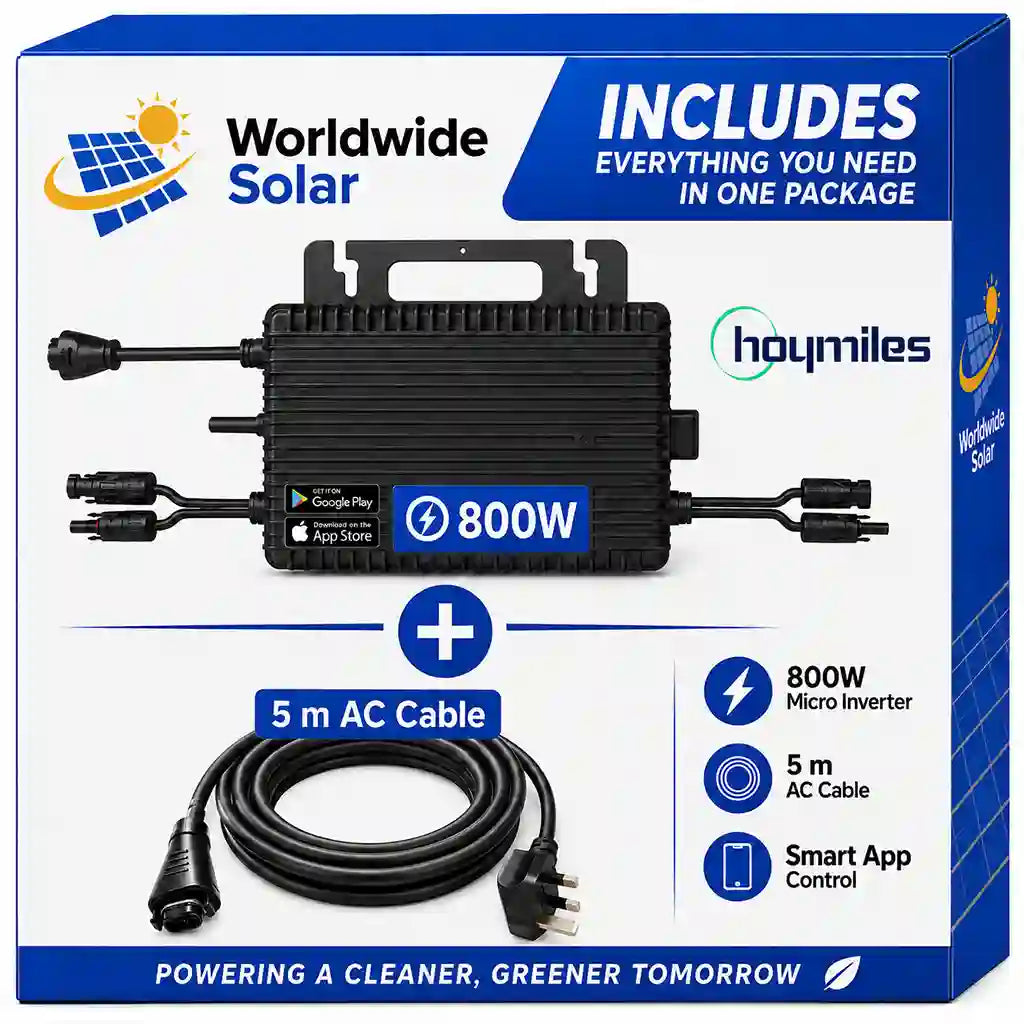
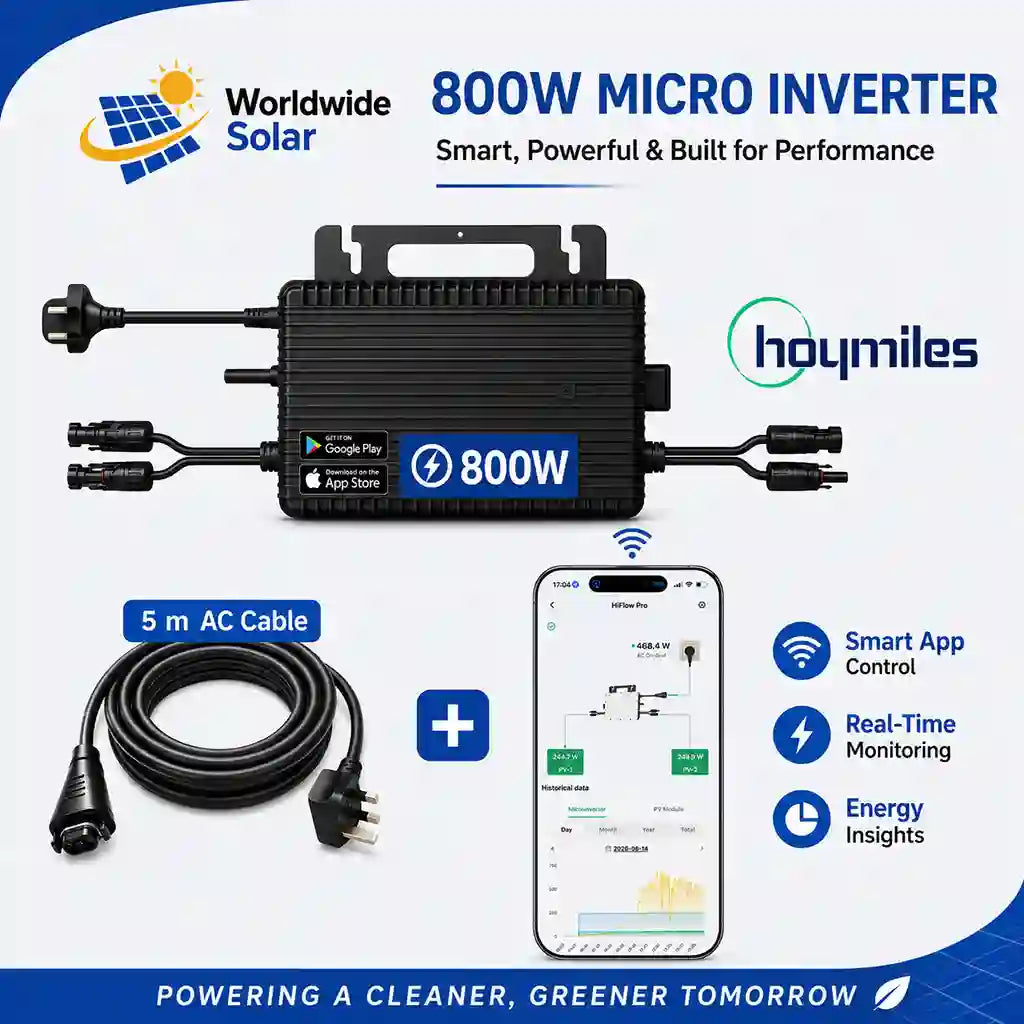
The microinverter is particularly important because it converts the DC electricity produced by the solar panels into AC electricity and controls the connection between the generating equipment, the household installation and the electricity network.
1. Check the Exact Microinverter in the ENA Connect Direct Database
Before purchasing a Plug & Play solar system, one of the best checks a homeowner can make is to search for the exact microinverter model in the Energy Networks Association's live device database.
The database is available here: ENA Connect Direct Generator Device Database.
Search using the manufacturer's name and exact microinverter model number. Similar products from the same manufacturer should not automatically be assumed to have identical compliance status.
This reference number is particularly important because it links the installed microinverter to the manufacturer's registered type-test information.
2. Why the ENA Reference Number Matters
Under G98, the DNO needs evidence that the generating equipment meets the applicable technical requirements.
ENA's G98 process normally refers to a Type Test Verification Report. However, when a manufacturer's reference number registered with the ENA is available, the separate verification report does not normally need to be supplied with the installation notification.
This makes registration significantly easier for a homeowner using a recognised microinverter already recorded in the ENA device register.
3. G98 Form B: The Installation Document
The standard G98 document used to inform the DNO is Form B — Installation Document.
One form is completed for each premises. It records information about the property, the customer, the installer and the generating equipment.
You can download the G98 Form B used for this process here: Download G98 Form B.
4. What If I Installed the Plug & Play System Myself?
With a homeowner-installed Plug & Play solar system, it is possible for the Customer and Installer to be the same person.
In that situation, the homeowner enters their own information in the Customer section and also completes the Installer information because they installed and commissioned the system themselves.
The signatures therefore relate to two different roles on the form, but those roles can be carried out by the same individual in a self-installed system.
5. When Must the DNO Be Informed?
A qualifying G98 microgenerator normally follows the familiar fit-and-inform process.
This means the compliant system can be commissioned and the local Distribution Network Operator is then informed afterwards.
Under the standard G98 process, the notification should be made no later than 28 days after commissioning.
The clock therefore relates to when the microgenerator was installed and commissioned, not simply when the equipment was purchased.
6. What Is a DNO?
DNO stands for Distribution Network Operator.
It is the organisation responsible for the electricity distribution network serving your property — the cables, substations and associated infrastructure that physically deliver electricity to your home.
Your DNO is not necessarily your electricity supplier.
For example, you might purchase electricity from Octopus Energy while the local electricity distribution network is operated by another company.
7. How Do I Find My Electricity Distributor?
One of the easiest places to look is your electricity bill.
Many bills contain a section identifying the electricity distributor, often alongside the emergency electricity-network telephone number.
Example:
ECLIPSE POWER NETWORKS LTD
[Network telephone number shown on your bill]
This is different from the energy company that charges you for electricity.
In some locations the distributor may be an Independent Distribution Network Operator rather than one of the larger regional DNO companies. The distributor named on your bill is therefore useful information when deciding where the G98 notification needs to go.
8. What Does G98 Compliance Mean?
G98 is the Energy Networks Association engineering recommendation governing the connection of qualifying small-scale generators to low-voltage electricity networks.
A compliant microinverter does much more than convert DC electricity into AC electricity. It continuously monitors the electricity network and contains protection functions designed to disconnect the generator when network conditions become unsafe.
This includes monitoring voltage, frequency and loss of mains.
9. What Is Anti-Islanding Protection?
Anti-islanding protection is one of the key reasons compliant microinverters can operate safely alongside the public grid.
Imagine that sunlight is reaching your solar panels when the local electricity network suddenly fails.
The solar panels themselves may still be physically capable of generating DC electricity, but the microinverter detects that the mains supply has disappeared and stops producing AC electricity.
This is an important safety feature because engineers working on the electricity network must be able to treat disconnected network wiring as de-energised.
10. Maximum AC Output: 800 VA
The current Plug & Play solar framework limits the maximum apparent AC output supplied to the household electrical system to 800 VA.
The associated current is limited to 3.5 A.
This is why 800 W-class microinverters are particularly relevant to the new Plug & Play market.
11. You Can Have Up to 2 kWp of Solar Panels
The 800 VA limit does not mean that only 800 W of solar-panel capacity can be connected on the DC side.
The final product specification allows total photovoltaic-module capacity of up to 2,000 W DC.
This arrangement is sometimes described as DC oversizing. The additional panel capacity can help the inverter produce more useful electricity during weaker sunlight, mornings, evenings and cloudy conditions while its maximum AC output remains capped.
12. Can the System Have Four Solar Panels?
Yes. The current Plug & Play specification allows a compliant multi-component system to contain up to four photovoltaic modules.
For example, four compatible 450 W panels would provide 1,800 Wp of total DC capacity while remaining below the 2,000 W limit.
However, the inverter and entire system must be designed for the intended panel configuration.
The fact that the rules permit up to four panels does not mean four panels can automatically be added to every 800 W microinverter.
13. What About Microinverters with Batteries?
Battery storage products are becoming increasingly common, and some inverter systems can accommodate several solar panels while also managing battery storage.
However, the government's present Plug & Play Solar Interim Product Specification does not automatically cover plug-in battery systems or Plug & Play solar products integrated with batteries.
These systems can therefore have different compliance and connection requirements.
Homeowners should not assume that an inverter/battery product falls within the simple 800 VA Plug & Play route merely because its solar input or AC output appears similar.
14. The Microinverter Reference Number Is More Important Than Marketing Claims
Product pages frequently use phrases such as “G98 compliant”, “UK compatible” or “approved for the UK”.
These statements can be useful, but the stronger check is the ENA device database itself.
Search for the exact model and record its manufacturer's reference number. This number can then be transferred directly to G98 Form B.
This creates a clear chain between:
- the physical microinverter installed at the property;
- the manufacturer's registered type-test information;
- the ENA device database; and
- the G98 notification sent to the network operator.
15. What Information Should You Keep?
It is sensible to keep a small installation record for your Plug & Play solar system.
Keep copies of:
- Purchase invoice
- Microinverter manufacturer
- Exact microinverter model
- Microinverter serial number
- ENA manufacturer's reference number
- Screenshot or record of the ENA compliance listing
- Solar panel make and model
- Total PV capacity
- Installation / commissioning date
- Completed G98 Form B
- Confirmation that the DNO received the notification
16. Does the Mounting System Matter?
Yes. Plug & Play solar includes more than the electrical components.
Solar panels need to be mounted securely and the mounting arrangement must be appropriate for the intended location.
Panels can potentially be positioned on suitable walls, fences, flat roofs, garages, patios and garden areas.
Ballasted mounting systems can be particularly useful in garden and flat-surface applications because they can support panels at an angle without necessarily requiring permanent drilling into the underlying surface.
17. Wind Resistance Is Important
Solar modules are large surfaces, so wind can create substantial forces on the mounting structure.
Panel dimensions, mounting angle, installation height, local wind exposure and ballast quantity can all affect mechanical security.
A compliant electrical system therefore still needs a properly designed physical mounting arrangement.
18. Great Britain and Northern Ireland
The G98 route discussed here applies to Great Britain — England, Wales and Scotland.
Northern Ireland operates under separate electricity-network arrangements, including its own G98/NI requirements.
Customers in Northern Ireland should therefore check the current local procedures rather than assuming the Great Britain process applies unchanged.
19. Practical Registration Checklist
After installing a compliant Plug & Play system:
- Find the exact microinverter in the ENA Connect Direct database.
- Copy the manufacturer's ENA reference number.
- Identify the electricity distributor / DNO serving the property.
- Download and complete G98 Form B.
- Enter the exact microinverter make and model.
- Enter the ENA manufacturer's reference number.
- If you installed the system yourself, complete both the Customer and Installer sections using your own details.
- Record the commissioning date.
- Sign the required Customer and Installer declarations.
- Submit the installation notification to the relevant DNO no later than 28 days after commissioning.
- Keep a copy of the completed form and any acknowledgement received.
20. The Legal Position in Plain English
| Question | Answer |
|---|---|
| Is Plug & Play solar legal in Great Britain? | Yes, when the system meets the applicable product and network requirements. |
| How do I check the microinverter? | Search the exact make and model in the ENA Connect Direct generator device database. |
| What reference do I need for G98? | The manufacturer's ENA-registered reference number associated with the exact microinverter. |
| What form can I use? | G98 Form B — Installation Document. |
| Can Customer and Installer be the same person? | Yes, in a homeowner self-installation the same individual can fulfil both roles and complete the corresponding sections. |
| When must the DNO be informed? | No later than 28 days following commissioning under the normal qualifying G98 fit-and-inform process. |
| Maximum AC output? | 800 VA under the current Plug & Play product specification. |
| Maximum solar-panel capacity? | Up to 2,000 W DC total PV-module capacity. |
| Maximum number of panels? | Up to four modules within a compliant manufacturer-supported system. |
| Does the system run during a power cut? | No. Anti-islanding / loss-of-mains protection causes a normal compliant grid-following inverter to stop its AC output. |
Conclusion
Plug & Play solar is now a legally recognised route into small-scale home solar generation in Great Britain, but the compliance and registration details matter.
Before purchasing a microinverter, homeowners should search the exact model in the Energy Networks Association's Connect Direct generator database. The manufacturer's reference number shown for the compliant device should be recorded because it can be used when completing the G98 installation notification.
G98 Form B provides a practical way to notify the network operator. The document records the customer, installer, premises and generating equipment. Where the homeowner installs the Plug & Play system themselves, the Customer and Installer can be the same person, with that individual completing the appropriate information and declarations for both roles.
Having an ENA-registered manufacturer's reference number also simplifies the process because the G98 procedure does not normally require a separate Type Test Verification Report where the registered reference is available.
The system's AC output remains limited to 800 VA, but the solar panels can have up to 2,000 W of combined rated DC capacity and a compliant system may contain up to four photovoltaic modules.
Grid protection is equally important. If the mains electricity supply disappears, anti-islanding protection causes a normal compliant microinverter to stop supplying AC electricity. This is why an ordinary Plug & Play system does not continue powering the house during a grid outage.
Finally, the local Distribution Network Operator needs to know that the generator has been connected. Under the standard qualifying G98 fit-and-inform process, notification is normally required within 28 days after commissioning.
Your electricity supplier and electricity distributor may be different companies, so it is worth checking your electricity bill. Many bills identify the distributor explicitly — for example, with wording such as “Your Electricity Distributor is: ECLIPSE POWER NETWORKS LTD”.
Once these straightforward steps are understood, the process becomes much clearer: choose a compliant inverter, record its ENA reference, install the system correctly, complete G98 Form B and inform the network operator.
Explore Plug & Play Solar with Worldwide Solar
Worldwide Solar supplies products for compact solar installations, including Plug & Play solar microinverters and mounting solutions for home, garden, wall, fence and flat-surface applications.
Visit Worldwide Solar to explore our growing range of practical solar products for UK homes.