Summary
For a compliant Plug & Play solar system in Great Britain, an electrician is not normally required simply to install and connect the system according to the manufacturer's instructions. This is one of the fundamental differences between Plug & Play solar and a conventional permanently wired rooftop photovoltaic installation.
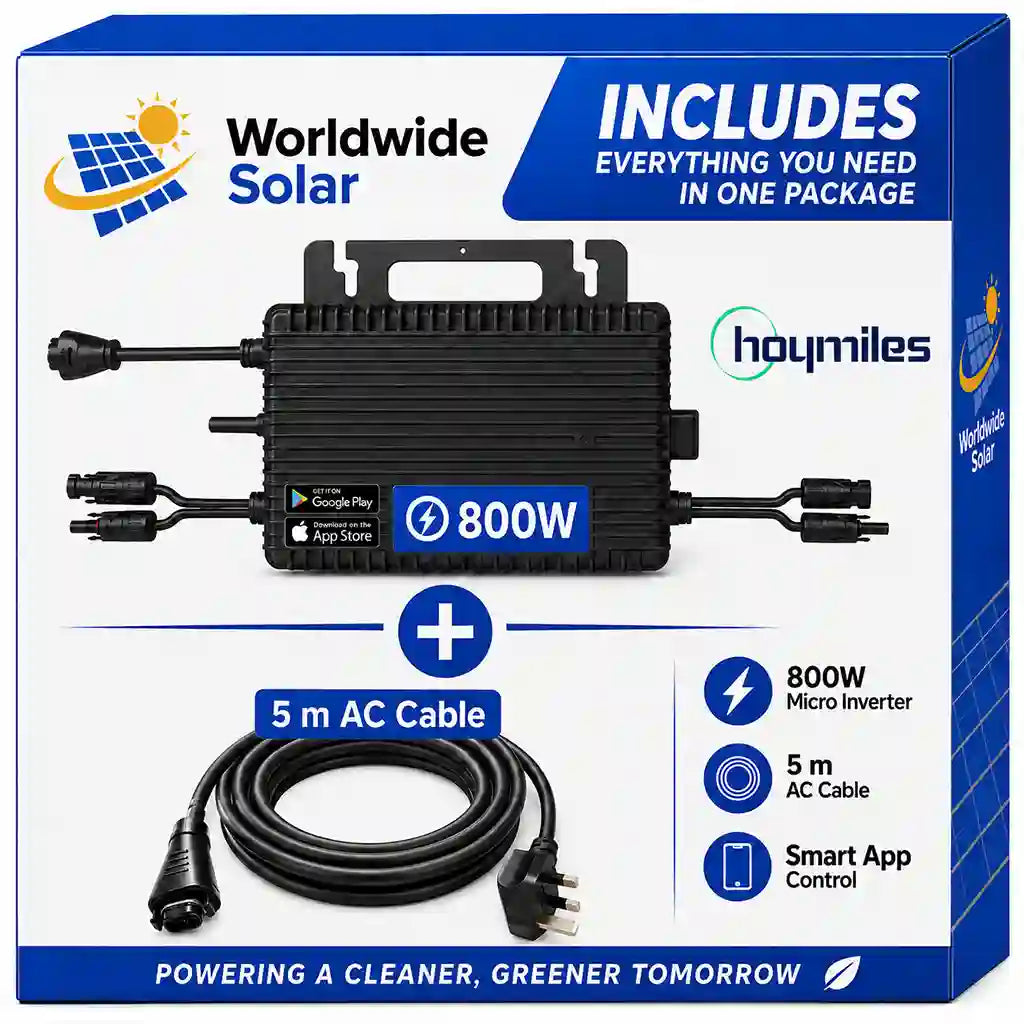
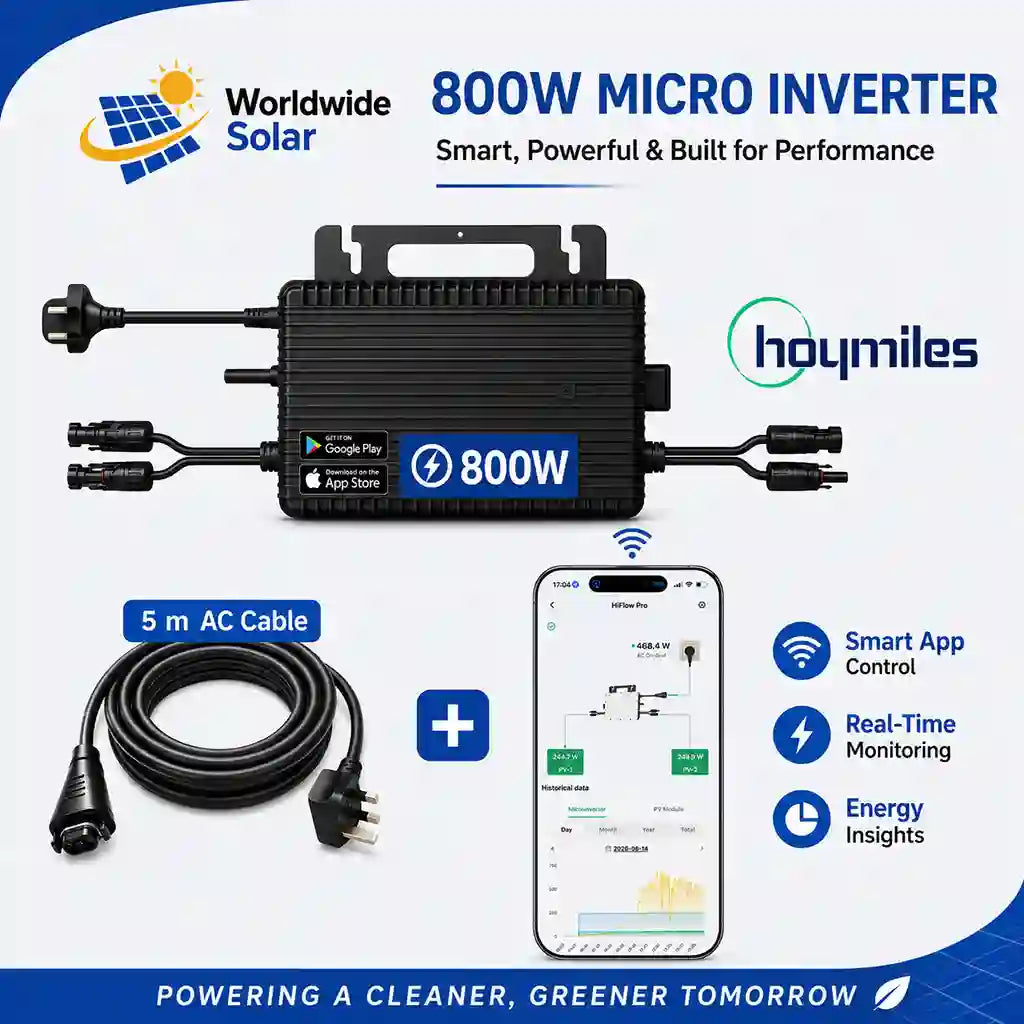
A qualifying Plug-in Micro-generator is designed as a complete product with an appropriate microinverter, protection functions and manufacturer-supplied mains connection. The system can therefore be particularly attractive to homeowners who want to begin generating solar electricity without immediately paying for a large professional rooftop installation.
However, the existing electrical installation still needs to be suitable. If the intended socket is damaged, the circuit is unsuitable, electrical faults are suspected, or a new socket or dedicated circuit needs to be installed, that electrical work should be carried out by a competent electrician.
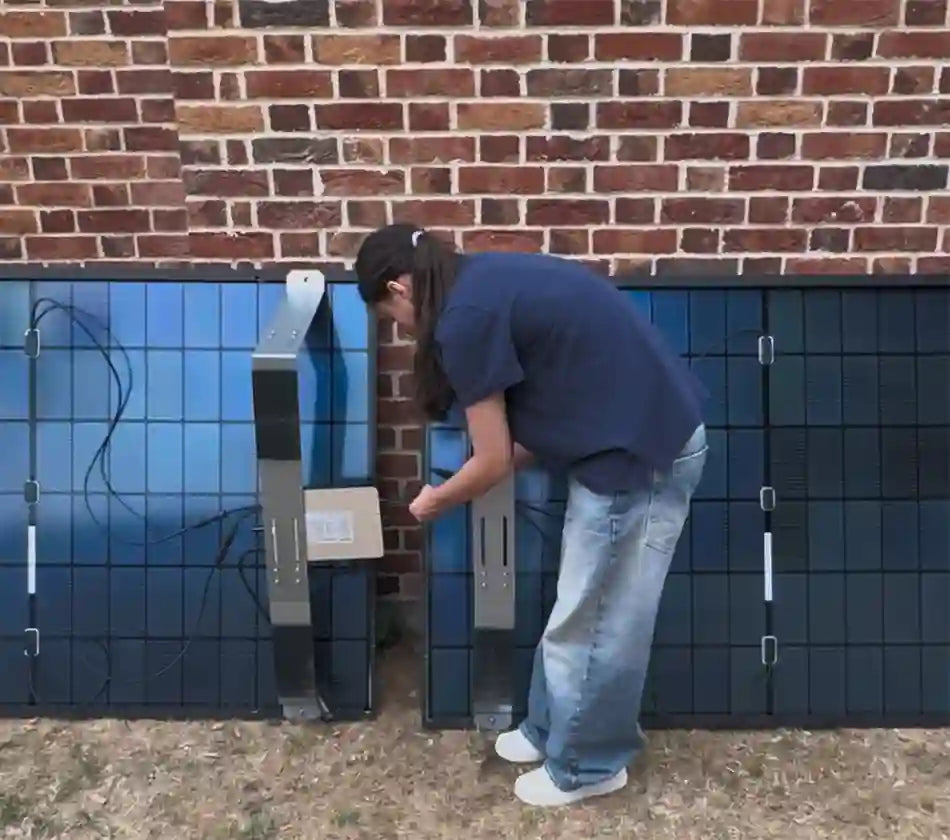
Mechanical installation matters too. Panels must be secured using an appropriate mounting system, whether they are installed in a garden using ballast brackets, on a suitable wall, on a flat surface or on an appropriate fence structure.
Following installation, the local Distribution Network Operator must also be notified under the applicable G98 process. For a Plug-in Micro-generator, the customer is permitted to take the role of installer, making the registration process considerably simpler.
🌱 Full Length Article (Click to collapse)
Do I Need an Electrician for a Plug & Play Solar System in the UK?
1. Plug & Play Solar Is Intended to Be Different
For many years, installing solar electricity at a UK home generally meant arranging a conventional rooftop photovoltaic system. Several panels would be fitted to the roof, cables routed through the building and an inverter permanently connected to the property's electrical installation.
That type of installation naturally involves professional electrical work.
Plug & Play solar follows a different concept. Instead of starting with an entire roof covered in panels, households can begin with a much smaller generating system built around one or more photovoltaic modules and a compact microinverter.
The system is designed as a product that can be assembled and connected according to the manufacturer's instructions rather than requiring the consumer to design a new solar electrical installation from individual components.
2. What Does the Homeowner Actually Do?
The exact installation process depends on the manufacturer's system, but the basic concept is straightforward.
3. Why Is an Electrician Not Automatically Required?
The central reason is that the customer is not expected to construct a new grid-connected inverter system from scratch.
A compliant Plug & Play product incorporates the components and protection necessary for its intended method of connection. The manufacturer defines how the panels, inverter, cable and plug are to be used together.
This is conceptually much closer to installing a defined consumer energy product than commissioning a traditional bespoke rooftop photovoltaic installation.
Importantly, the G98 framework specifically recognises that for a Plug-in Micro-generator the customer may take the role of installer. This is a major practical distinction from traditional domestic solar installation.
4. When Would You Still Need an Electrician?
There are several circumstances where professional electrical assistance remains appropriate.
✅ Usually No Electrician
- Compliant complete Plug & Play system
- Suitable existing socket
- Existing circuit is in good condition
- No electrical alterations required
- Manufacturer's connection system used exactly as supplied
- Solar panels and inverter are compatible
⚡ Electrician May Be Needed
- A new socket needs to be installed
- A new circuit is required
- Existing wiring appears damaged or outdated
- Protective devices need alteration
- The socket becomes unusually warm
- Electrical faults repeatedly occur
- You are unsure about the condition of the installation
5. The Existing Socket Still Matters
The fact that a compliant system can connect through a plug does not make the condition of the socket irrelevant.
A socket with cracked plastic, burn marks, loose fittings or other obvious signs of damage should not be used. Likewise, repeated tripping or signs of overheating should be investigated rather than ignored.
Most modern homes with electrical installations in good condition are likely to have suitable circuits available, but older or altered properties may justify additional checking.
6. Do Not Improvise the AC Connection
Plug & Play means using the product as designed. It does not mean creating your own connection arrangement.
The manufacturer's supplied plug, cable and connection components form part of the intended system. They should not be casually replaced with unsuitable extension cables, homemade adaptors or improvised wiring.
7. The Microinverter Provides Important Grid Protection
One of the reasons the microinverter is so important is that it does much more than turn DC electricity from the solar panels into household AC electricity.
A compliant grid-connected microinverter monitors the electricity network and responds when network conditions move outside permitted limits.
An important example is loss-of-mains protection, commonly described as anti-islanding protection.
If the public electricity supply fails, the microinverter detects the loss of the grid and stops its normal AC generation.
8. What About Mounting the Solar Panels?
Avoiding an electrician does not mean the physical installation can be treated casually.
Solar panels are large surfaces exposed to wind, rain and changing weather. They must therefore be secured properly using a mounting arrangement designed for the intended location.
Small Plug & Play systems can offer considerable flexibility because panels do not necessarily have to be installed on the main house roof.
They may potentially be installed in gardens, on suitable flat roofs, walls, fences, garages, sheds and other appropriate structures.
9. Garden Ballast Systems Can Simplify Installation
Garden installations are particularly interesting because they can provide an accessible alternative to rooftop mounting.
A suitable ballasted mounting system can support one or more panels at a defined angle while using sufficient weight to stabilise the structure. This may avoid the need to drill permanently into a patio, concrete slab or other suitable surface.
Ground-level installations also make solar modules easier to inspect, clean and maintain.
However, ballast quantity and structural design must be appropriate for the size of the panels, their angle and expected environmental conditions. Wind loading should never be ignored simply because a panel is installed close to the ground.
10. Wall and Fence Systems Need Secure Fixings
Walls and suitable fencing can provide useful solar-generating areas where garden floor space is limited.
The mounting components and the underlying structure need to be sufficiently strong. A mounting system should therefore be selected for the particular wall, fence or structural material rather than improvised from general-purpose hardware.
This work is primarily mechanical rather than electrical, so it does not automatically require an electrician. However, anyone who is not comfortable assessing structural fixings may prefer to use an experienced installer.
11. Is Plug & Play Solar Suitable for Most Homes?
In practical terms, Plug & Play solar should be suitable for many ordinary UK homes.
A homeowner does not need an enormous south-facing roof. A sunny garden area, garage, suitable wall, flat surface or fence may provide an alternative location for one or two modules.
The key considerations are whether there is a suitable place for the panels, whether they can be securely mounted, whether the required cable can reach the intended connection point and whether the existing electrical installation is suitable.
This flexibility is one of the reasons small Plug & Play systems can make solar available to households that may never have considered a traditional rooftop system.
12. What About Older Houses?
The age of a house alone does not automatically determine whether Plug & Play solar can be used.
A Victorian property may have had its electrical installation completely modernised, while a much newer property could have damaged or poorly modified wiring.
What matters is the condition and suitability of the electrical installation.
If you have doubts about the wiring, consumer unit, earthing arrangements, sockets or protective devices, having an electrician inspect the installation before connecting generation is sensible.
13. What If I Need a New Outdoor Socket?
This is a good example of where the distinction becomes clear.
You may be perfectly capable of assembling and mounting the Plug & Play solar system yourself, but if the desired location does not have an appropriate socket and a new fixed electrical connection needs to be installed, that is separate electrical installation work.
A competent electrician should carry out such work in accordance with the relevant electrical requirements.
14. Do You Need an Electrician to Notify the DNO?
No. A qualifying Plug-in Micro-generator does not require an electrician simply for the purpose of notifying the Distribution Network Operator.
The current G98 framework specifically allows the customer to take the role of installer for a Plug-in Micro-generator.
This means a homeowner who installs their compliant system can also provide the installation information required by the DNO.
15. How Does the G98 Notification Work?
After installation, the local Distribution Network Operator needs to be informed that a generating device has been connected at the property.
The newer G98 documentation includes a dedicated Form B2 for Plug-in Micro-generators. Alternatively, the relevant information can be submitted electronically through the appropriate Connect Direct notification process.
16. How Long Do You Have to Notify the DNO?
Under the applicable G98 process, the DNO should be provided with the required installation information no later than 28 days after commissioning.
This means the notification is normally made after the system has been installed and commissioned rather than requiring the ordinary householder to obtain advance permission for a qualifying installation.
17. What Information Will You Need?
It is sensible to keep the following information:
- Your name and installation address
- Your MPAN electricity supply number
- The Plug & Play system manufacturer
- The exact system model
- The ENA Connect Direct system reference
- The Registered Capacity
- The installation or commissioning date
- Details of any existing generating equipment at the property
- A copy of the notification submitted to the DNO
18. How Do You Find Your DNO?
Your electricity supplier and your Distribution Network Operator are not necessarily the same company.
For example, a household might buy its electricity from one energy supplier while another organisation owns or operates the local distribution network.
Your electricity bill may identify the electricity distributor serving the property. You can also use recognised electricity-network lookup services if necessary.
19. What About an Electrician's Inspection for Peace of Mind?
There is nothing wrong with asking an electrician to inspect your installation even when one is not formally needed to plug in the compliant system.
Some homeowners may simply prefer professional reassurance, particularly if they have recently moved into an older property or do not know when the electrical installation was last inspected.
The important point is that this is different from saying that every Plug & Play customer must automatically pay an electrician before using the product.
20. Plug & Play Solar vs a Conventional Installation
| Question | Plug & Play Solar | Conventional Rooftop Solar |
|---|---|---|
| Typical scale | Small system | Several kilowatts |
| Electrical connection | Manufacturer-designed plug connection | Normally permanently wired |
| Electrician automatically required? | Normally no, if the existing installation is suitable | Normally yes |
| Homeowner installation possible? | Yes, for a compliant system used as instructed | Normally professionally installed |
| Mounting possibilities | Garden, wall, fence, flat surface and other suitable locations | Commonly house roof |
| Initial investment | Generally much lower | Usually considerably higher |
| DNO notification | Required under the relevant G98 process | Required under the applicable generation connection process |
21. The Main Advantage Is Lower Complexity
The importance of Plug & Play solar is not merely that it uses fewer panels.
It lowers the practical barrier to beginning solar generation.
A conventional rooftop installation can represent a substantial household investment and usually requires professional surveying, installation and electrical work. That approach makes sense for households seeking a large solar array, but it may be more than someone needs when they simply want to reduce daytime electricity consumption.
Plug & Play solar provides another option: start small, use a suitable part of the property and begin generating renewable electricity without automatically committing to a large construction project.
22. When I Would Definitely Call an Electrician
- you see damage or burning around the intended socket;
- the socket or plug becomes unusually hot;
- the circuit repeatedly trips;
- you need a new socket or new circuit;
- you intend to alter the manufacturer's connection arrangement;
- you are unsure about the condition of your property's wiring or protective devices; or
- there is any other indication of an electrical fault.
Conclusion
For many UK homeowners, one of the most attractive features of a compliant Plug & Play solar system is that an electrician is not normally required simply to install and connect the product.
The system is designed as a complete small-scale generating product rather than a conventional permanently wired rooftop installation. The homeowner can position and securely mount the panels, connect the compatible components according to the manufacturer's instructions and use the supplied mains connection.
That simplicity should not be confused with permission to ignore electrical safety. The existing socket and circuit still need to be suitable, and damaged or questionable electrical equipment should never be used. If new fixed wiring, a new circuit or a new socket is required, a competent electrician should carry out the electrical work.
Mechanical safety is equally important. Garden ballast systems, wall brackets, fence mounting systems and other mounting solutions must secure the panels appropriately and account for environmental forces such as wind.
The homeowner also has responsibilities after installation. The local Distribution Network Operator must be notified under the relevant G98 procedure. For a qualifying Plug-in Micro-generator, however, the customer can take the role of installer, and the new Form B2 provides a dedicated notification route for this type of system.
This combination of simpler installation, lower initial cost and straightforward network notification is what makes Plug & Play solar different. It gives many households an opportunity to begin generating renewable electricity without the complexity and expense traditionally associated with a complete rooftop photovoltaic installation.
Explore Plug & Play Solar with Worldwide Solar
Worldwide Solar supplies products for compact home solar installations, including Plug & Play solar microinverters and mounting solutions for gardens, walls, fences and other suitable locations.
Our aim is to make small-scale solar generation practical and accessible for UK households that want to reduce their reliance on grid electricity without immediately committing to a large conventional rooftop installation.
Visit Worldwide Solar to explore our growing range of Plug & Play solar products and practical mounting solutions.