Summary
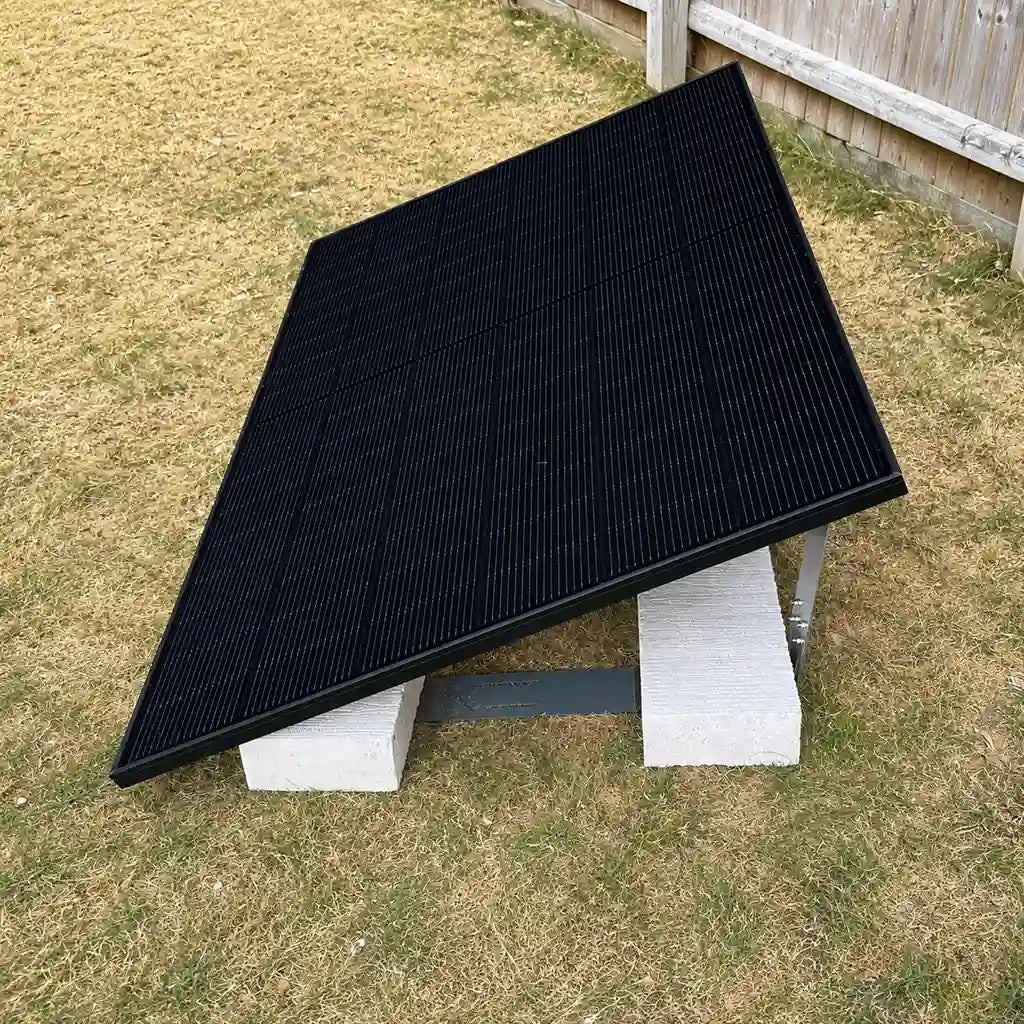
A compact one- or two-panel system can be installed in many gardens using a purpose-designed ground or ballasted mounting frame. The best position normally receives good sunlight for much of the day, avoids regular shade and does not obstruct paths, doors, play areas or garden maintenance.
The mounting structure must be suitable for the panel dimensions and local wind conditions. Large modern panels present a considerable surface area to the wind, so their frames need the correct ballast or fixings rather than relying only on the panel's weight.
The AC cable also needs a protected route to the house. The microinverter, plug-in equipment and electrical arrangement should be appropriate for outdoor use and the intended UK connection. Grid-connected generation must follow the relevant DNO process. Planning permission may not always be required, but permitted-development rights have conditions and differ across the UK, so local requirements should be checked.
🌱 Full Length Article (Click to collapse)
Can I Install Plug & Play Solar Panels in My Garden?
1. Why Gardens Are Well Suited to Plug & Play Solar
Plug & Play solar developed partly from the European balcony-solar market, but Britain does not have the same concentration of apartment balconies as countries such as Germany. Many UK homes do, however, have gardens, patios, garages and other accessible outdoor spaces.
A garden installation can therefore be a natural British alternative. It allows a household to generate solar electricity without covering the main roof, arranging scaffolding or committing immediately to a large conventional array. The system can begin with one or two panels and may remain easier to reach for inspection and cleaning.
The word “garden” covers many different situations. A paved patio, gravel area, lawn, raised terrace and detached outbuilding all present different mounting and cable-routing questions. The system should be planned around the actual location rather than treated as a freestanding household appliance.
2. What Does a Garden Solar System Need?
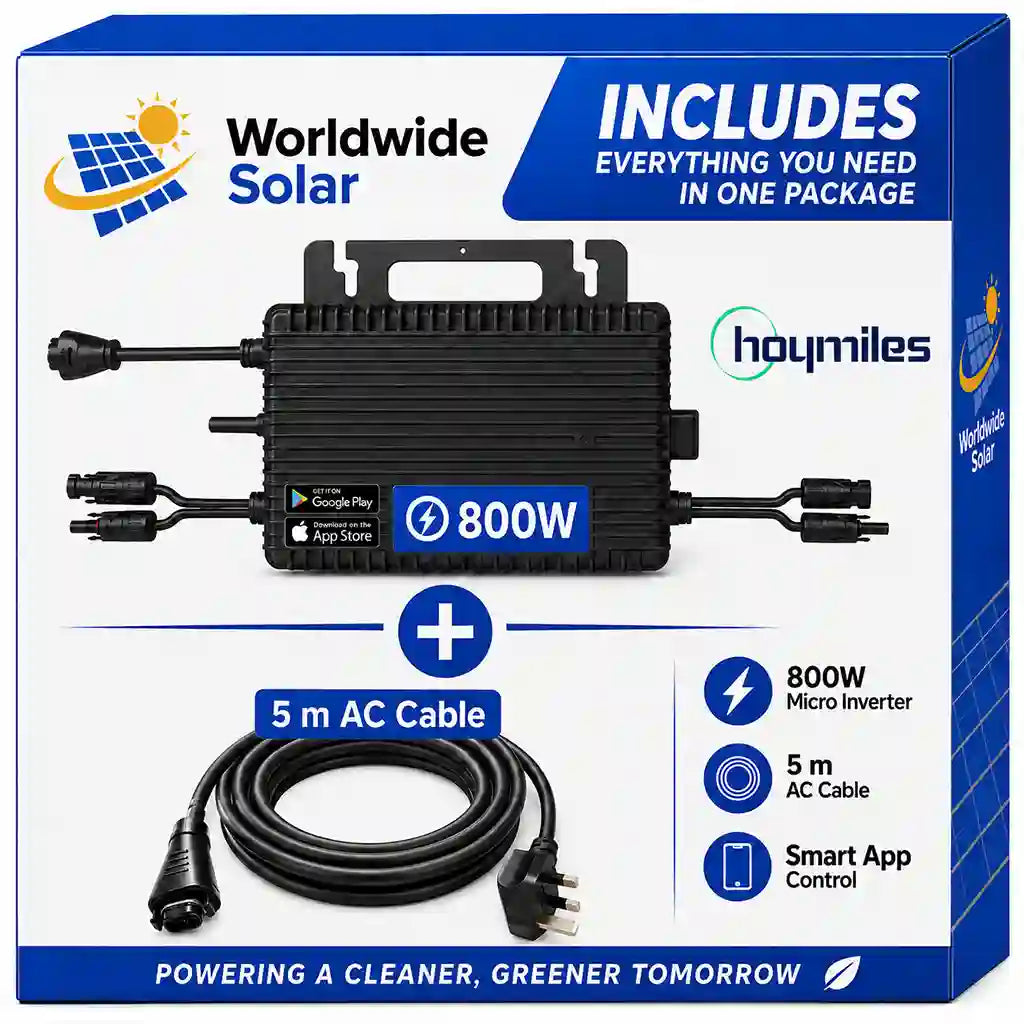
The panels and microinverter receive the most attention, but the mounting frame and cable are equally important. A complete system needs components that are mutually compatible, suitable for outdoor exposure and appropriate for use in Great Britain.
3. Finding the Best Position in the Garden
The ideal position receives strong sunlight without regular shade from the house, trees, fences or neighbouring buildings. A location that looks sunny at midday can still be shaded for much of the morning or afternoon, and the pattern changes through the seasons.
South-facing panels generally provide strong overall UK generation, but south-east and south-west can also perform well. East- or west-facing arrangements may better match morning or afternoon electricity use. The aim is not always to chase the highest theoretical annual output; useful generation at the times the household consumes electricity also has value.
4. Do Not Ignore Seasonal Shading
The sun sits lower in the sky during winter, causing buildings and trees to cast longer shadows. Deciduous trees may lose their leaves, but their trunks and branches can still shade the panels. A position assessed only on a bright summer afternoon may perform very differently in November or January.
Before deciding, observe the proposed location at several times of day. Solar-planning tools can help, but simple repeated observation is also useful. If the system is genuinely movable, its position may be adjusted seasonally—but only if the mounting remains secure after every move.
5. The Mounting System Is Crucial
A modern solar panel is a large flat surface exposed to wind. Even a relatively heavy glass-and-aluminium panel can lift, slide or overturn if it is supported by an unsuitable lightweight stand. The mounting system must hold the panel at the correct angle while resisting the forces expected at the location.
Purpose-designed garden systems commonly use ballast rather than permanent foundations. Concrete blocks, paving slabs or other specified weights keep the structure stable without penetrating the ground or patio. The required amount and position of ballast depend on the frame design, panel dimensions, tilt, wind exposure and installation conditions.
6. Ballasted Mounting or Permanent Fixing?
A frame placed on soft or uneven soil can settle, tilt or become unstable. A firm, level base makes alignment easier and helps distribute weight. If panels are installed on a shed, pergola or garden structure rather than at ground level, that structure must be assessed for the additional static and wind loads.
7. Leave Enough Space Around the Panels
Panels should not obstruct a path, emergency route, gate or frequently used play area. Leave room for air movement, vegetation control, inspection and cleaning. Avoid positions where footballs, garden tools, lawnmowers or falling branches are likely to strike the glass or cables.
Also consider how rainwater runs from the lower edge. Concentrated runoff can create mud or erosion beneath the frame. Grass and weeds may grow high enough to shade the panel, so the area should remain accessible for maintenance.
8. Cable Length and Routing Need Planning
Garden panels can be some distance from the house. Measure the actual cable route, not the straight-line distance. A safe route may need to follow walls, go around doors or avoid a patio and therefore require substantially more cable.
Cables should be suitable for their environment, supported or protected as appropriate, and kept away from sharp edges, standing water, gardening equipment and locations where people may trip over them. Connections should not be left lying on wet ground.
9. Can the Microinverter Stay Outdoors?
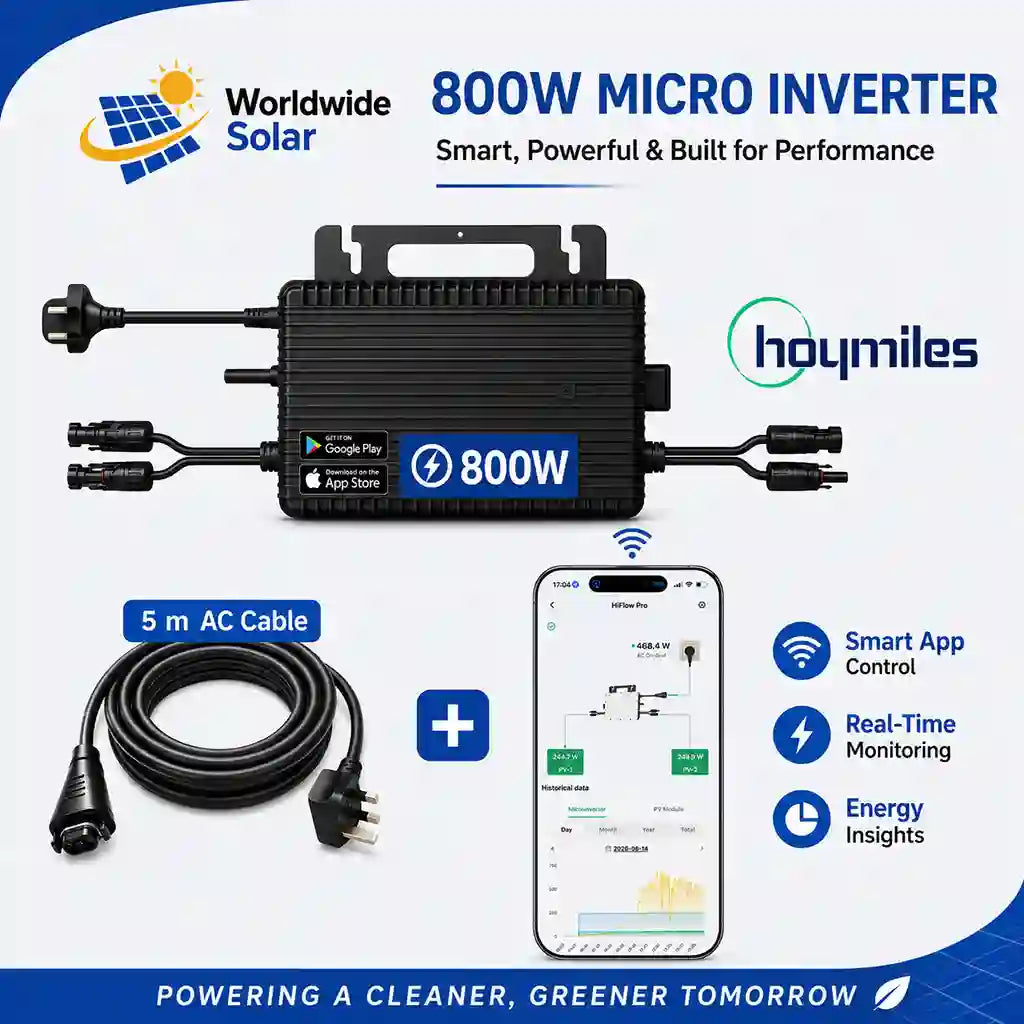
Many solar microinverters are designed for outdoor installation and carry an environmental protection rating. This does not mean every position is equally suitable. Follow the manufacturer's instructions concerning mounting direction, ventilation, clearance, direct sunlight, water exposure and connector positioning.
The microinverter should be securely attached rather than left loose beneath the panels. Connectors must be compatible and fully engaged. Equipment intended only for indoor use should remain indoors unless placed within a correctly designed enclosure.
10. What About the Electrical Connection?
A Plug & Play system operates in parallel with the household electricity supply. The appropriate connection method depends on the product, circuit and rules applying to the installation. Buyers should not assume that any imported European balcony-solar kit can simply be connected to any UK socket.
The microinverter should be suitable for use in Great Britain, and the complete arrangement must comply with the applicable electrical requirements. Where circuit alterations, a new socket or assessment of the existing installation are needed, an appropriately qualified electrician should carry out or verify the work.
11. Does the DNO Need to Be Notified?
Grid-connected generation is relevant to the local Distribution Network Operator. Fully type-tested microgenerators up to and including 16A per phase fall within the scope of Engineering Recommendation G98, but the correct connection and notification procedure still needs to be followed.
A small garden system may be far below the usual single-phase G98 ceiling of approximately 3.68kW, yet its size does not make it invisible to the network. Check the current process and retain the system's type-test and commissioning information. The Energy Networks Association provides guidance on connecting generation to electricity networks.
12. Do Garden Solar Panels Need Planning Permission?
They may fall within permitted-development rights, meaning a planning application is not always necessary. However, rights are subject to limits and conditions, and circumstances differ for listed buildings, conservation areas, designated land and properties where permitted-development rights have been restricted.
The Planning Portal's solar-panel guidance states that solar equipment on residential buildings and land may be permitted development, but recommends checking whether all relevant conditions are met. Its guidance relates to England; Wales, Scotland and Northern Ireland have their own planning systems.
Tenants, leaseholders and homeowners subject to estate covenants may also require consent from a landlord, freeholder, management company or other party even where planning permission is unnecessary.
13. Garden Solar Safety Checklist
- Choose a sunny position with limited seasonal shading.
- Confirm that the frame fits the exact panel dimensions.
- Use the specified ballast or approved permanent fixings.
- Place the system on a firm and suitably level surface.
- Keep panels clear of paths, play areas and garden equipment.
- Plan a protected cable route before positioning the frame.
- Use compatible connectors and outdoor-rated equipment.
- Check the proposed electrical connection and circuit suitability.
- Follow the current DNO connection or notification process.
- Check local planning restrictions and any property consents.
14. The Bottom Line
Yes, Plug & Play solar panels can be installed in a garden, and for many UK homes the garden may be more practical than a balcony or main roof. A compact system can provide useful daytime electricity while remaining accessible and relatively flexible.
The success of the installation depends on more than finding an empty patch of sunlight. Secure mounting, adequate ballast, seasonal shade, cable protection, electrical suitability, DNO requirements and planning conditions all need attention.
A carefully planned garden system can offer a straightforward route into home solar generation. The panels should be treated as permanent outdoor generating equipment, however—not simply placed in the garden like temporary furniture.
Explore Garden Solar with Worldwide Solar
Worldwide Solar supplies practical Plug & Play solar products, including microinverters, compatible solar panels and purpose-designed mounting solutions for gardens, patios, walls, fences and other suitable locations.
Before choosing a system, measure the available space and cable route, observe seasonal shading and select mounting equipment designed for the panel dimensions and intended installation environment.
Visit Worldwide Solar to explore flexible solar solutions for small-scale renewable electricity generation in UK homes and gardens.