
Summary
A small Plug & Play solar system in the UK may cost several hundred pounds, while larger or more complete systems can cost considerably more. The final price depends primarily on panel capacity, the microinverter, the type of mounting, cable length, delivery and any professional work required.
A low advertised price may cover only the panels and inverter. Garden and flat-roof systems may need substantial ballasted frames, while wall and fence installations require suitable brackets and structural fixings. Buyers should therefore compare the complete delivered cost of a system that is ready to install, not just its headline price.
🌱 Full-Length Article (Click to collapse)
1. Plug & Play Solar Changes the Cost of Getting Started
When British homeowners think about solar power, they often picture a conventional rooftop installation with perhaps eight, ten or more panels, scaffolding, professional installation, electrical work and a substantial initial investment. Plug & Play solar approaches the question differently. Instead of filling an entire roof, it allows a household to begin with one or two panels in a suitable location.
This opens up places such as gardens, patios, walls, mesh fences, garages and suitable flat roofs. It can be particularly useful for people who do not want, cannot accommodate or are not yet ready for a full rooftop array. The initial investment can consequently be much lower, although the final price still depends on everything required to turn the panels into a safe, complete and usable system.
2. What Are You Actually Paying For?
A complete system contains several important components, each contributing to the price. Two offers that appear similar at first glance can therefore have very different final costs.
3. Solar Panels Are Only One Part of the Price
Solar-module prices have fallen greatly over the development of the photovoltaic industry. Modern residential panels can provide substantial generating capacity, but a panel on its own will not reduce an electricity bill. It must be mounted securely and connected to compatible equipment.
When comparing packages, look at the combined wattage rather than merely counting panels. Two offers may each include two panels but provide noticeably different total generating capacities. Dimensions also matter: higher-output panels are often physically large, so the installation area and mounting system must suit their size and weight.
4. The Microinverter Is a Major Part of the System
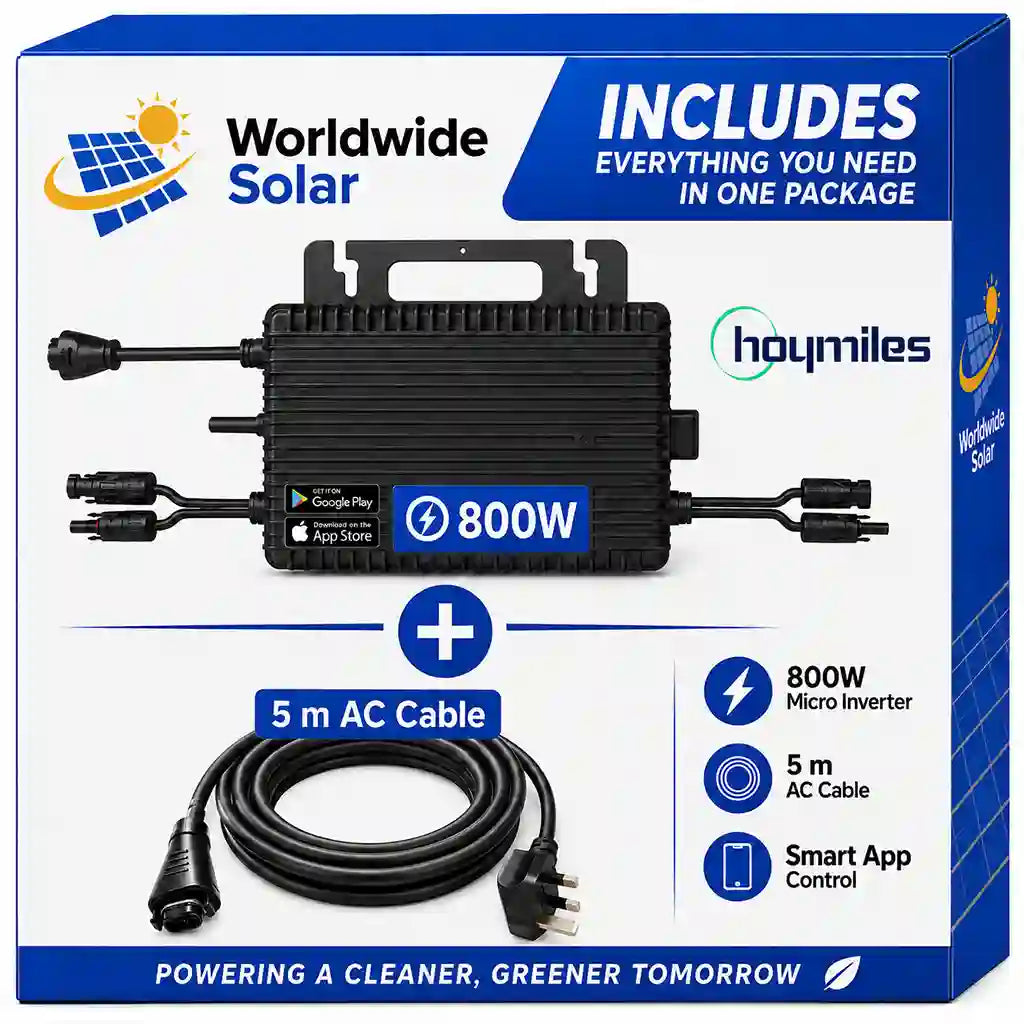
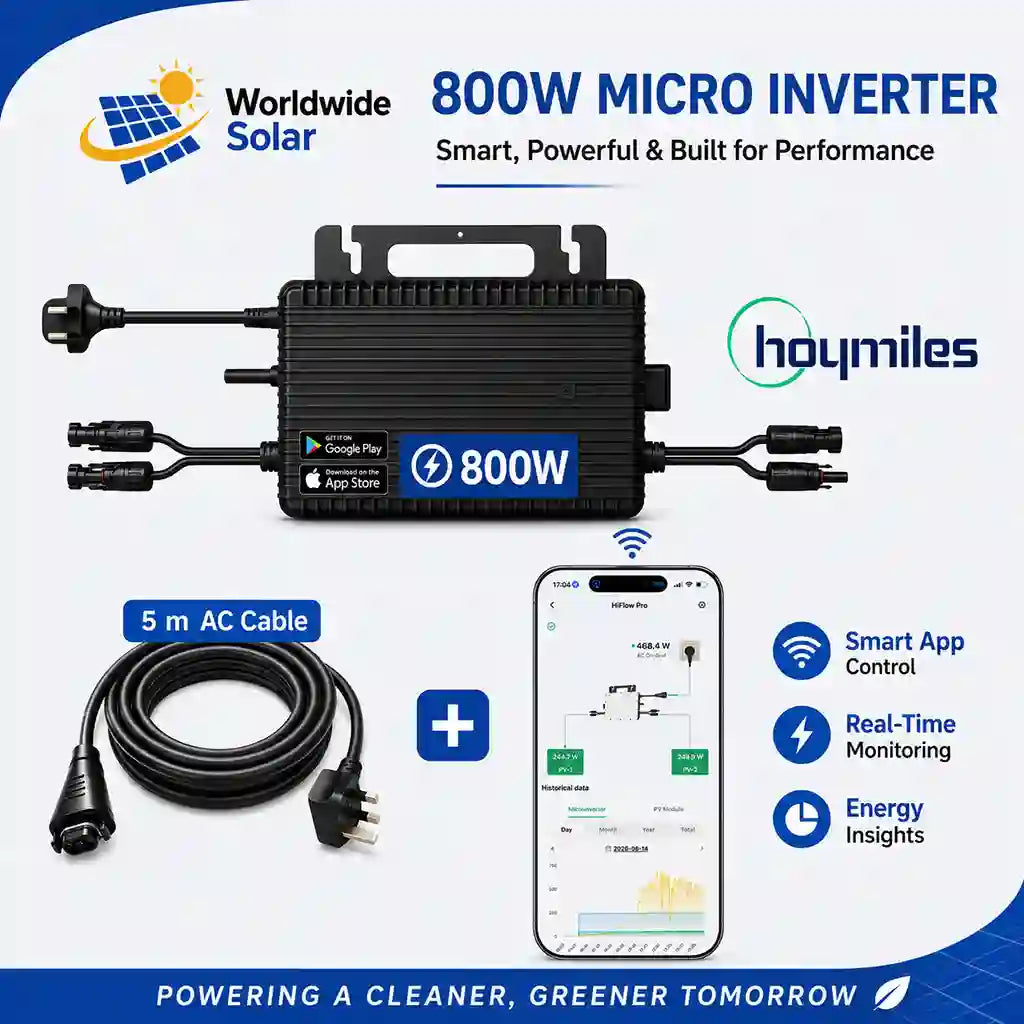
The microinverter converts the DC electricity produced by the panels into AC electricity and manages the panels' output. Models vary considerably in capacity, build quality and features. These may include independent MPPT inputs, built-in Wi-Fi, app-based monitoring, weather protection, manufacturer support and longer warranties.
For a two-panel system, a compatible dual-input microinverter can be economical because one device manages both panels. This is one reason adding a second panel does not necessarily double the cost of the complete system.
5. Mounting Can Change the Total Price Considerably
Mounting is one of the most variable costs because Plug & Play solar can be installed in several different locations. Panels remain outdoors through wind, rain and changing temperatures, so the solution must suit the panels, supporting structure and local conditions.
| Location | Typical Solution | Cost Consideration |
|---|---|---|
| Garden or patio | Ground or ballasted angled frame | The frame and suitable ballast form part of the real cost. |
| Wall | Purpose-designed wall brackets | Appropriate structural fixings may also be required. |
| Mesh fence | Fence mounting brackets | The fence itself must be suitable for the additional load. |
| Flat roof | Ballasted mounting system | Roof suitability, ballast and wind loading need consideration. |
A package advertised without mounting equipment may look much cheaper than a complete system. Once the correct frame, brackets, clamps and fixings are added, the price difference can become much smaller.
6. One Panel or Two?
A one-panel system normally provides the lowest entry cost, but two panels do not necessarily cost twice as much. A suitable dual-input microinverter can serve both panels, and the AC side of the arrangement does not need to be duplicated merely because another panel is added. Depending on the design, parts of the mounting structure may also be shared.
Where sufficient space is available, two panels may therefore offer a better balance between price and generating capacity. The correct choice should still reflect the available location, shading, expected generation and the household's daytime electricity consumption.
7. Cable Length Is Easy to Overlook
The AC cable may seem like a minor detail, but it is especially important for garden systems. A five-metre cable might be sufficient beside a house yet unsuitable for panels at the end of a garden, on a detached garage or along a fence. Cable routes also rarely follow a perfectly straight line.
8. Monitoring May Be Included—or Cost Extra
Many modern microinverters allow owners to view generation through an app or online platform. Some include Wi-Fi within the unit, while others require a separate communications gateway. If extra hardware is needed, include it in the total system price.
Monitoring is more than a novelty. It shows when the panels are generating strongly and can help a household shift suitable electricity use into daylight hours, improving the proportion of solar electricity consumed directly.
9. Do Not Forget Delivery
Solar panels are large and awkward to transport. Even if they are not exceptionally heavy, their dimensions may require oversized-item handling or pallet delivery. Steel or aluminium mounting systems can add considerable weight. Always compare the delivered price; a package that is cheaper before shipping may not remain cheaper once delivery is included.
10. Headline Price Versus Real System Cost
11. What About Installation Costs?
Compact systems can avoid some costs associated with conventional rooftop solar, such as scaffolding and extensive roof work. However, “Plug & Play” should not be interpreted as meaning every installation is automatically a simple DIY project.
Positioning a purpose-designed ballasted frame in an accessible garden is very different from working at height, drilling into a building or altering an electrical installation. Any professional mounting or electrical work needed for the chosen arrangement should be included in the project budget.
12. UK Suitability Is Part of the Value
Plug & Play solar has grown from the European balcony-solar market, particularly in countries such as Germany. British homes often offer different opportunities, including gardens, garages, fences, walls and flat roofs. More importantly, electrical connection rules and approval requirements are not identical in every country.
Buyers in Great Britain should check the applicable requirements and confirm the status of the inverter or microinverter they intend to use. The relevant Distribution Network Operator requirements and the Energy Networks Association's equipment information should form part of the buying decision. Equipment that cannot appropriately be used for the intended installation is not a bargain, however low its purchase price.
13. How Should You Compare Prices?
Instead of comparing only the figure shown on a product page, check the complete specification:
- Total wattage and dimensions of all panels
- Microinverter make, model, capacity and number of inputs
- UK suitability of the generating equipment
- Monitoring capability and any separate gateway required
- AC cable type and length
- Mounting equipment, clamps, fixings and ballast
- Delivery charges and access requirements
- Any professional mounting or electrical work
- Panel, microinverter and mounting warranties
Once these points are known, it becomes much easier to compare like with like and identify genuine value.
14. Cost Should Be Considered Together with Payback
The purchase price is only one side of the financial calculation. The other is how much useful electricity the system produces and how much of it the household consumes directly. A small system can be effective at covering part of the home's daytime background demand from refrigerators, freezers, routers, computers and home-office equipment.
Total System Cost ÷ Estimated Annual Electricity Saving = Approximate Payback Period
Expected annual generation depends on location, orientation, tilt, shading, weather and equipment performance. Savings also depend on the electricity tariff avoided and the proportion of generation used in the home. Payback figures should therefore be treated as estimates, not guarantees.
15. Is Plug & Play Solar Expensive?
That depends on the comparison. A complete system naturally costs far more than a panel by itself because the panel is only one component. Compared with a large professionally installed rooftop array, however, a compact one- or two-panel system can offer a much lower-cost entry into home solar generation.
This modular approach is one of its main strengths. A household can begin with a smaller amount of capacity in an appropriate location rather than making one large investment immediately. It can then observe real generation and consumption patterns before considering whether a larger system would be worthwhile.
16. The Cheapest System Is Not Necessarily the Best Value
Price matters, but value depends on compatible components, secure mounting, adequate cable length, useful monitoring, manufacturer support and suitability for the intended UK installation. Warranty length and the future availability of replacement components also deserve attention because solar panels can remain in service for decades.
A system that includes dependable equipment and the correct mounting solution may cost more initially yet prove better value than a cheaper package that requires several additional purchases or lacks suitable support.
17. Questions to Ask Before Ordering
- How many panels are included, and what is their combined wattage?
- Which microinverter is supplied, and is it suitable for the intended UK connection?
- Is Wi-Fi monitoring included or is another device required?
- How long is the supplied AC cable?
- Is the mounting system suitable for my garden, wall, fence or flat roof?
- Are all necessary brackets, clamps, connectors and fixings supplied?
- Will additional ballast or structural work be required?
- What does delivery cost?
- Will professional installation or electrical work be necessary?
- What warranties apply, and who provides support?
18. The Bottom Line
There is no single fixed answer to the question “How much does a Plug & Play solar system cost in the UK?” A one-panel garden system, a two-panel wall installation and a flat-roof system can require different amounts of equipment even when they use similar panels.
The most reliable approach is to compare complete delivered systems. Include the panels, microinverter, mounting equipment, cable, connectors, monitoring, delivery and any installation work. Then check whether the equipment is appropriate for its intended use in Great Britain.
Plug & Play solar can provide a lower-cost and more flexible route into domestic solar generation, but the best-value system is not necessarily the one with the lowest headline price. It is the one that arrives with the right compatible components, can be installed securely in the chosen location and is ready to generate useful electricity for years to come.